
Mauna Lani Fish Ponds: Ancient Hawaii on the Kohala Coast
The fish ponds at Mauna Lani are about 800 years old. Hawaiian ali'i (chiefs) had them built by hand, stacking lava rock into walls that still hold today, to farm 'Ama'ama (mullet) and awa (milkfish) in the brackish water where the ocean meets the land. They are some of the best-preserved ancient aquaculture sites in the Pacific, and they sit right along the shoreline trail at what is now the Mauna Lani resort on the Kohala Coast.
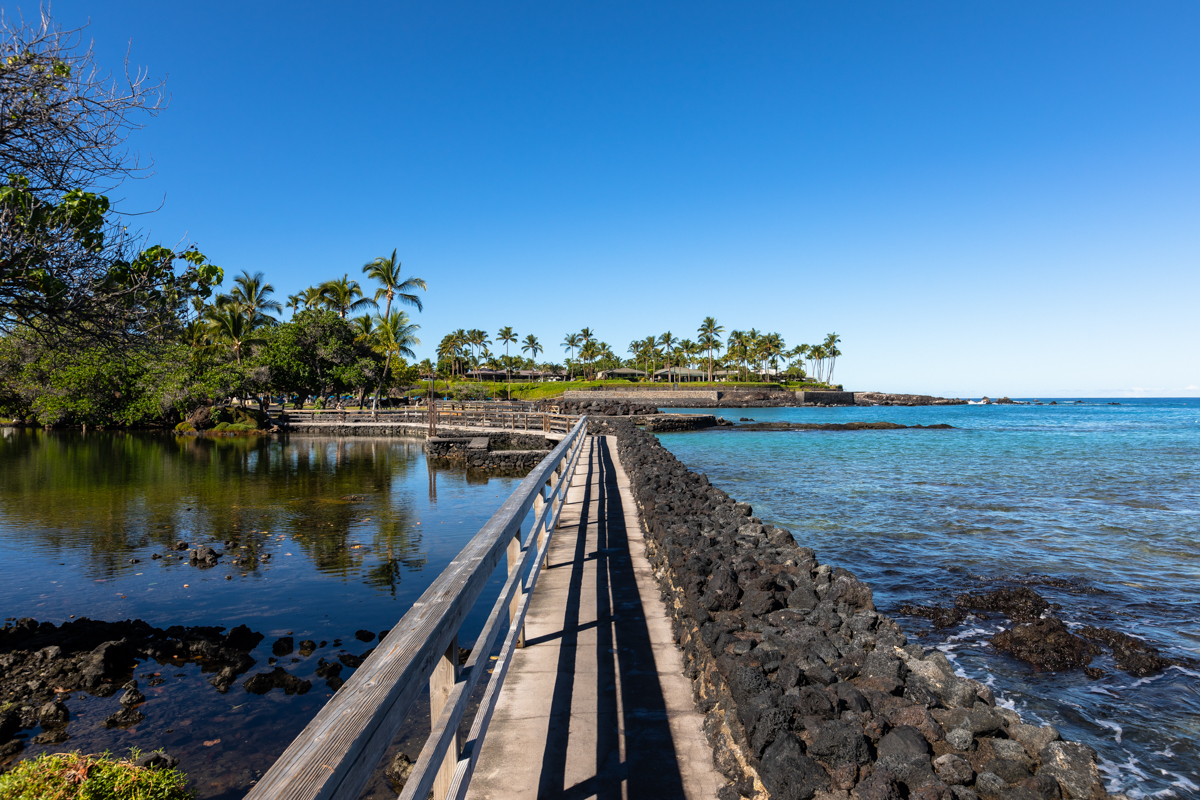
What you're looking at
The main pond is Kalāhuipua'a and covers about 4.6 acres total. The walls are built from 'a'ā lava rock, rough and dark, with sluice gates that let seawater in and out with the tides while keeping the fish inside. The water runs green and brackish, ringed by coconut palms and kiawe trees. Turtles rest on the rocks at the edges. It's quiet in a way that most of the Kohala Coast isn't.
The trail
A flat, paved path runs along the ponds and connects to the beach at Makaiwa Bay. The full loop is about 1.5 miles and takes 30–45 minutes at an easy pace. You'll pass ancient petroglyphs carved into the lava, a few small caves used as burial sites, and interpretive signs that explain the history without being heavy-handed. The trail is open to the public — you don't need to be a resort guest.
Getting there
Turn off Queen Ka'ahumanu Highway (Hwy 19) at the Mauna Lani Resort entrance, about 20 miles north of Kona. Follow the signs toward the beach club. Public parking is available near the beach access point. The trailhead is well marked from the parking area. Arrive before 9am on weekends — the lot fills up.
Best time to visit
Early morning is the best time. The light is good, the air is cooler, and you'll likely have the trail mostly to yourself. By midday the lava radiates heat and the path gets busy with resort guests. The ponds are worth seeing year-round, but winter months (November through March) bring calmer mornings and occasional whale sightings offshore.
What to bring
Water, sunscreen, and closed-toe shoes or sturdy sandals — the lava rock edges are sharp if you step off the path. There's no shade for most of the trail. The beach at the end has restrooms and an outdoor shower.
Worth knowing
The Kalāhuipua'a Historic Park section of the trail is particularly well maintained and has the most interpretive signage. If you're staying nearby, this is an easy half-morning outing before the beach crowds arrive.

